Wasp Pest Control: Safe and Effective Wasp Nest Removal Services

Wasp nests pose immediate danger to California families. Unlike bed bugs or ants, wasps defend their territory aggressively and can sting multiple times. Each year, more than 500,000 people visit emergency rooms for insect sting reactions, and according to the CDC, an average of 62 people die annually from hornet, wasp, and bee stings.

Professional wasp pest control services eliminate these threats safely. This guide walks you through everything California homeowners need to know about wasp nest removal, from identifying the species threatening your property to understanding treatment methods and choosing the right exterminator.

Difference Between Wasps, Yellow Jackets, and Hornets in California

There are thousands of stinging insect species in California, with over 5,000 species of bees and wasps alone. Understanding what you’re dealing with helps you assess the threat level and communicate effectively with pest control professionals. Here’s a quick overview of the most common stinging insects in California homes.

FeaturePaper WaspsYellow JacketsHornetsMud Daubers
Size~1 inch long0.5 to 0.75 inchesUp to 1.5 inches (largest)~1 inch long
AppearanceSlender body, long dangling legs, brownish with yellow markingsRobust build, bright yellow and black stripesLarge, black and white (bald-faced hornets)Black or metallic blue, thread-like waist
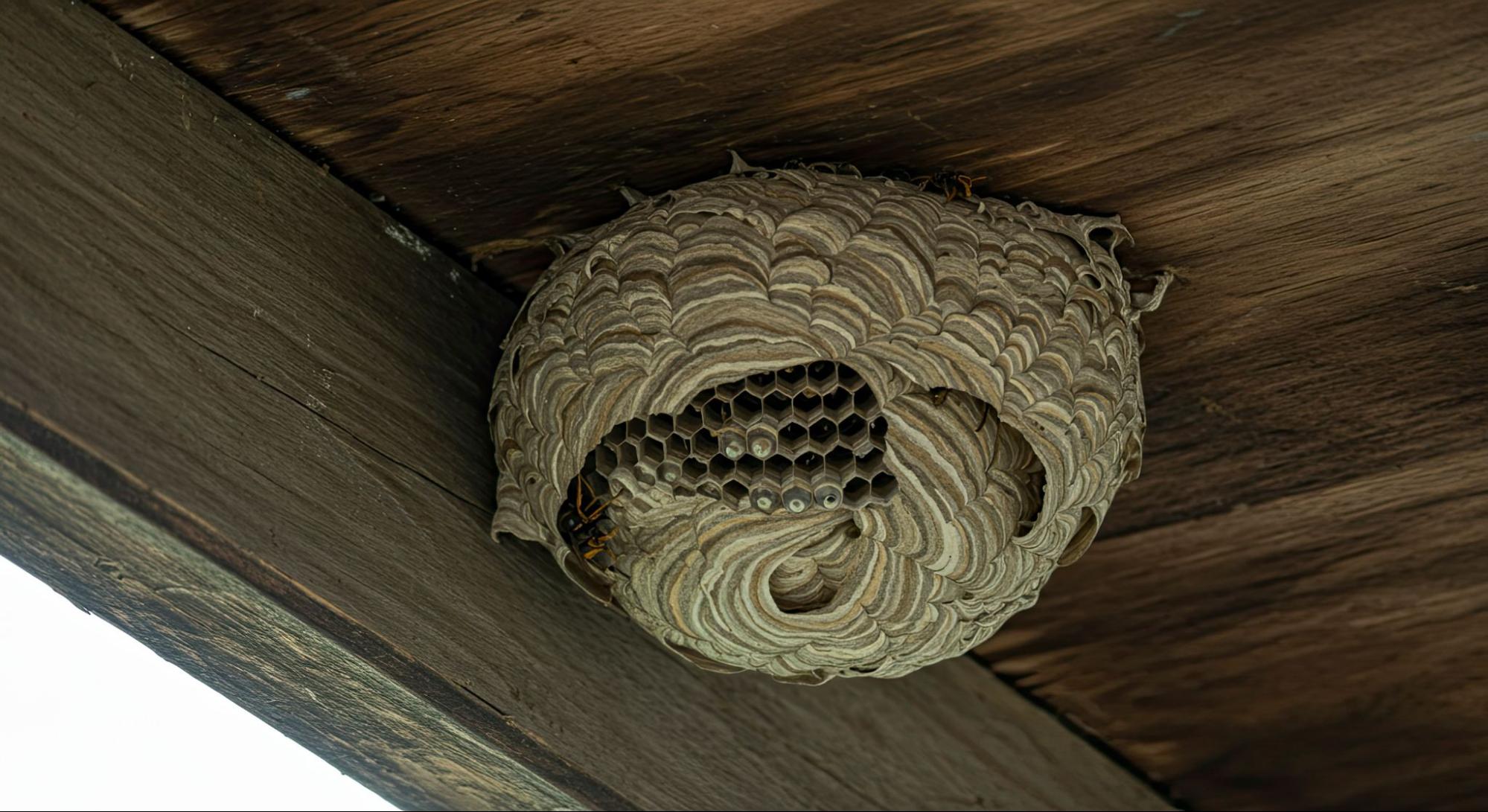
Nest TypeOpen, umbrella-shaped with visible hexagonal cellsEnclosed paper nests (above or below ground)Large enclosed paper nests (basketball-sized)Small mud tubes
Nest LocationEaves, overhangs, branchesGround burrows, wall voids, eavesTrees, structures (10-30 feet high)Walls, under eaves, protected areas
Colony SizeSmall to medium (dozens)Large (thousands of workers)Medium to large (400-700 workers)Solitary (no colony)
Aggression LevelModerate – Defensive when threatenedVERY HIGH – Most aggressive California speciesHIGH—Aggressive defenders chase intrudersVERY LOW – Rarely sting humans
Peak ActivityJuly – SeptemberSeptember – October (most aggressive)July – SeptemberSpring – Fall
Danger LevelModerateEXTREMEHighMinimal
Ground Nests?NoYes (very dangerous)NoNo
Professional Removal?Recommended for large nestsALWAYS REQUIREDALWAYS REQUIREDUsually unnecessary

Key Facts About California Stinging Insects:

Population: Over 5,000 species of bees and wasps in California

Extended Season: April through October (some year-round activity in mild winters)

Peak Problems: July through September in Fresno and Central Valley

Why California Has More Wasp Activity:

  • Mild winters allow queen wasps to survive more easily
  • Earlier spring nest establishment
  • Larger summer populations than colder regions
  • Lack of hard freezes extends active season

Most Dangerous: Yellow jackets cause the majority of pest control calls due to:

  • Extreme aggression (especially September-October)
  • Large colonies (thousands of workers)
  • Ground nests hidden from view
  • UC Davis study: 60% increase in complaints during September vs. July

Quick Decision Guide:

If You See This…Action Required
Small paper wasp nest in springConsider DIY (if experienced) OR call professional
Any yellow jacket activityCall professional immediately
Hornet nest anywhereCall professional immediately
Ground nest discoveredCall professional immediately – do not disturb
Mud dauber tubesMonitor only (minimal threat)
Multiple nests of any typeCall professional immediately
Nest near doorways/high-trafficCall professional immediately

Signs You Need Wasp Pest Control Services

While DIY efforts can help to some degree, professional help effectively does the job. Professional wasp exterminator services use advanced tools and methods and know how to handle dangerous encounters.

Immediate Warning Signs:

  • Active wasp nest visible on your property
  • Multiple wasps consistently entering and exiting a specific location
  • Wasps hovering near eaves, soffits, attic vents, or ground areas
  • Increased wasp activity near doors, windows, or outdoor living spaces
  • Aggressive behavior when you approach certain areas of your yard

When to Call Immediately:

The National Pest Management Association recommends professional removal for any nest near high-traffic areas. Call wasp exterminator services immediately if the nest is located near doorways, playgrounds, patios, or other areas where children and pets spend time. Do not wait for the nest to grow larger or for someone to get stung.

If anyone in your household has known sting allergies, professional removal is not optional. Allergic reactions to wasp stings can occur within minutes and require immediate medical attention. According to the American College of Allergy, Asthma and Immunology, approximately 5% has experienced life threatening allergic reactions to insect stings.

Multiple stings occurring on your property indicate an established, defensive nest. Wasps can sting repeatedly without dying, unlike honeybees. A single yellow jacket can sting multiple times in rapid succession, injecting venom with each sting. If family members or visitors have been stung, the nest requires immediate professional attention.

Dangers of Wasp Nests and Stinging Insects

Understanding the real risks helps homeowners make informed decisions about professional wasp nest removal.

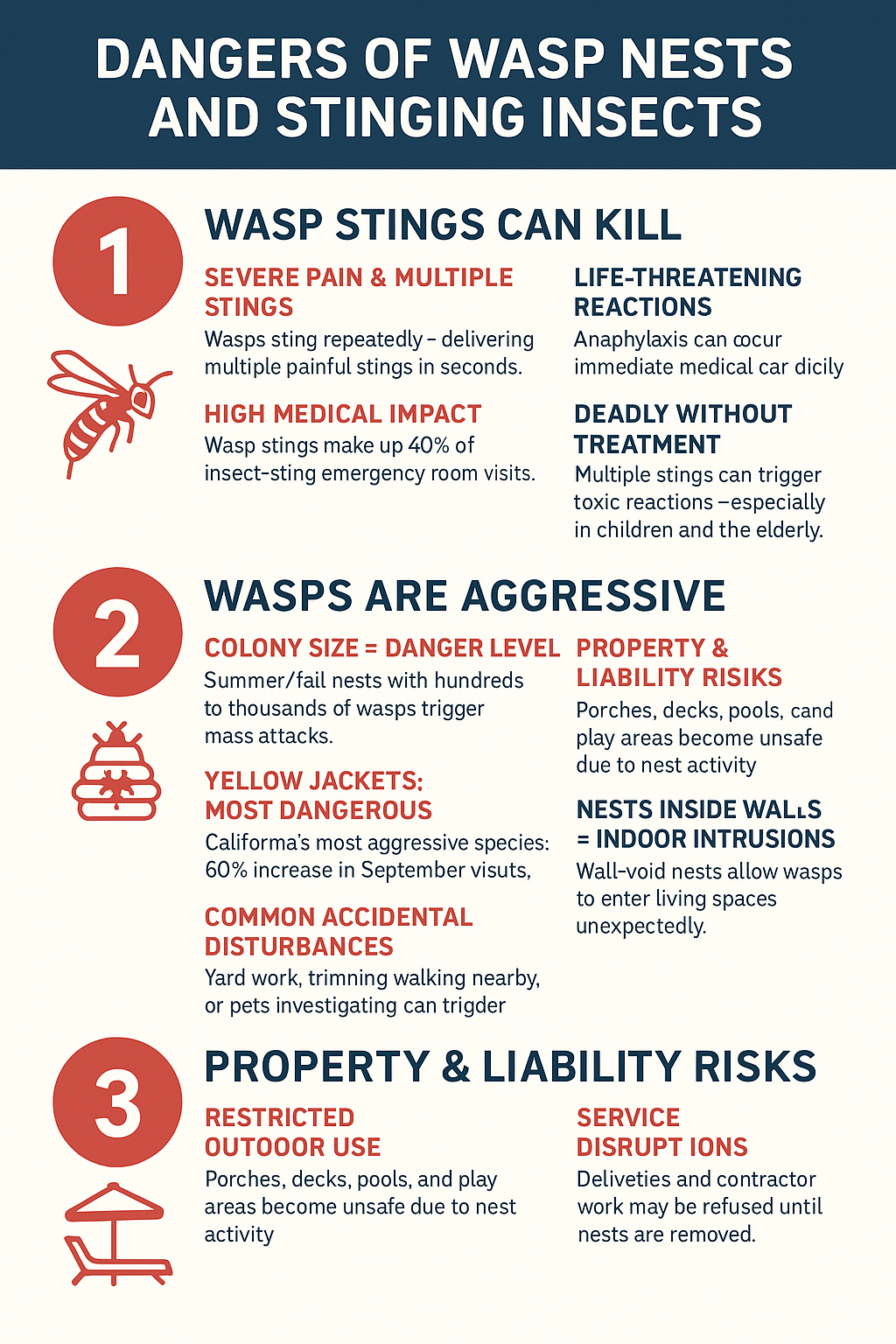
1. Wasp Stings Can Kill

Immediate Dangers:

  • Wasp stings cause severe pain, more intense than ant or mosquito bites
  • Unlike honeybees, wasps sting multiple times without dying
  • Single wasp can deliver multiple stings in seconds
  • Venom triggers pain receptors and can cause allergic reactions

Life-Threatening Reactions:

  • Anaphylaxis symptoms: difficulty breathing, rapid pulse, dizziness, severe facial swelling, loss of consciousness
  • Symptoms develop within minutes of being stung
  • 40% of insect sting emergency room visits involve wasp stings
  • Requires immediate emergency medical care

When Reactions Turn Deadly:

  • Normal reaction: localized pain, redness, swelling (resolves in hours to days)
  • Large reaction: swelling extends beyond sting site, can affect entire limb
  • Allergic reaction: can cause death without immediate treatment
  • Multiple stings create toxic reactions even in non-allergic individuals (children and elderly are more vulnerable)

2. Wasps are Aggressive

Colony Size Determines Danger Level:

  • Small spring nests (queen + few workers): minimal threat
  • Large summer/fall nests (hundreds to thousands of workers): extreme danger
  • Wasps release alarm pheromones triggering mass attacks
  • Entire colony responds to perceived threats

Yellow Jackets: Most Dangerous Species:

  • Most aggressive California wasp species
  • Peak aggression in late summer and fall
  • Food scarcity increases irritability
  • 60% increase in complaints during September vs. July

Common Ways Nests Get Disturbed:

  • Lawn mowing and yard work
  • Pruning or trimming vegetation
  • Walking near established nests
  • Children playing outdoors
  • Pets investigating scents
  • Vibrations from equipment trigger attacks

Why Ground Nests Cause Most Injuries:

  • Hidden from view until disturbed
  • No warning before stepping on or near them
  • Immediate mass attack response
  • Little time to escape
  • Victims sustain dozens of stings within seconds

3. Can Result to Property and Liability Issues

How Wasp Nests Restrict Property Use:

  • Outdoor areas become no-go zones
  • Porches, decks, pools unusable
  • Play areas too dangerous for children
  • Normal yard maintenance becomes hazardous
  • Wall void nests allow wasps to enter living spaces

Legal and Service Problems:

  • Guests stung may require emergency medical care
  • Potential liability for injuries on your property
  • Mail carriers may refuse delivery
  • Contractors won’t complete work
  • Service workers avoid dangerous properties


image3


Professional Wasp Nest Removal Process

Licensed pest control professionals follow systematic approaches that prioritize safety while ensuring complete nest elimination.

Initial Inspection and Assessment

Professional removal begins with phone consultation about wasp activity patterns, nest locations, species, and any sting incidents. On-site inspection identifies all nests and assesses treatment requirements. Experienced technicians know where different species prefer to nest and check all likely locations.

You don’t need to know where the nest is before calling. Professional exterminators locate nests by observing wasp flight patterns. Wasps follow consistent paths back to their nest. For nests inside wall voids or underground, professionals use thermal imaging or tracking dust to pinpoint exact locations.

Risk assessment considers proximity to doors, windows, play areas, and household members with sting allergies. Technicians establish safety perimeters and determine whether occupants need to remain indoors during treatment.

Treatment Methods

Direct Nest Treatment is most common for accessible nests. Professional-grade insecticides knock down wasps within minutes and penetrate deep into nests. These commercial products contain higher concentrations than consumer sprays and work faster with longer range. Technicians apply treatments during early morning or evening when wasps are less active. Unlike store-bought sprays that only kill wasps at the entrance, professional treatments eliminate entire colonies including queens.

Dust Applications work best for ground nests and wall void infestations. Insecticidal dust adheres to wasps and spreads throughout the colony as they contact each other. Dust remains effective for weeks, making it ideal for ground yellow jacket nests where liquid treatments can’t penetrate deep burrows. For wall voids, technicians apply dust through small access holes, filling the space where wasps have established colonies.

Physical Nest Removal occurs only after treatment eliminates the colony. Immediate removal of active nests is dangerous and unnecessary. Professional protocols require waiting until all activity ceases. Treated nests pose no threat once colonies die. For difficult locations, removal may not be necessary.
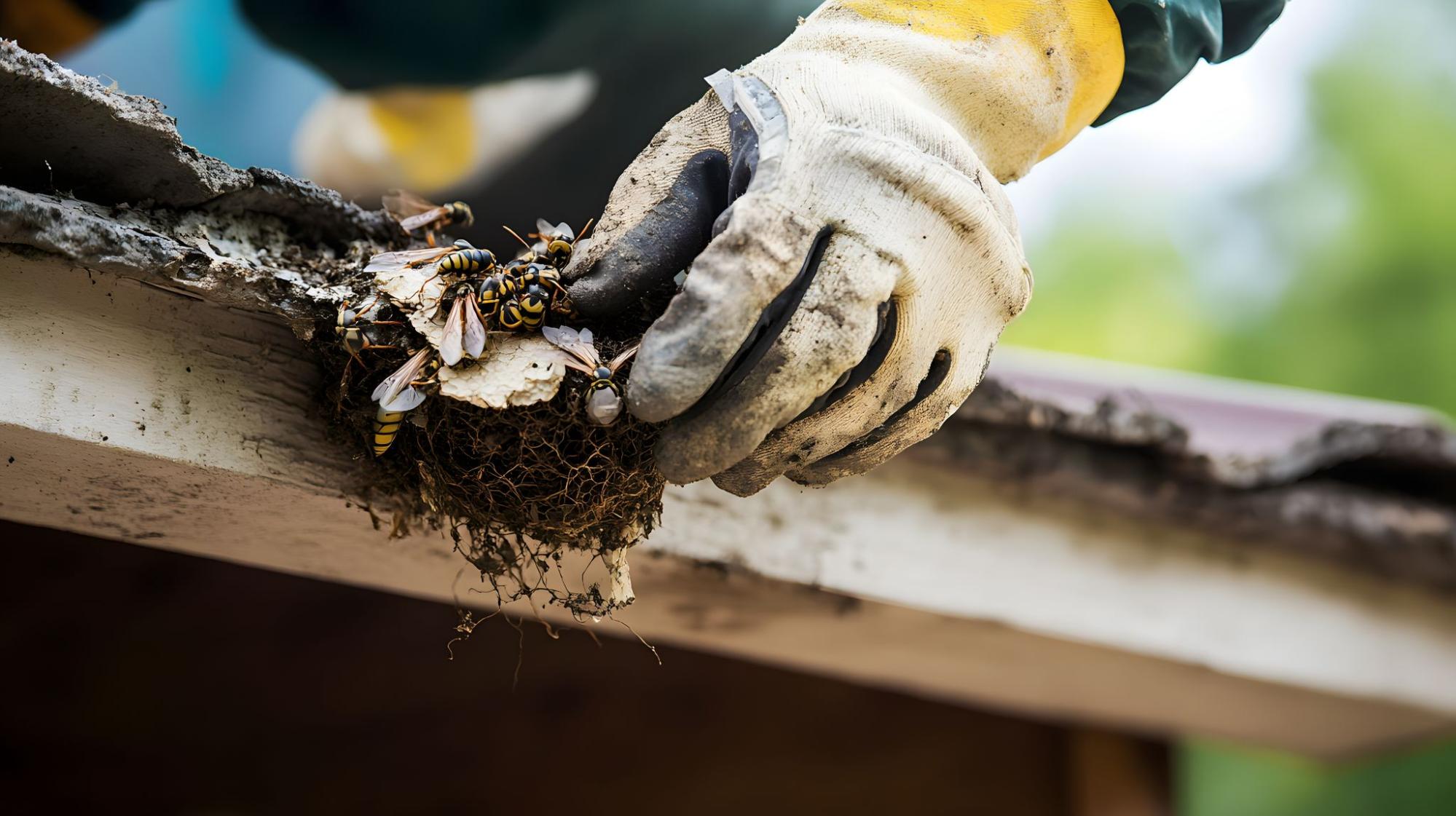
 

image2 1


Safety Protocols

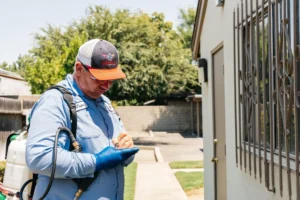
Licensed technicians wear full protective gear, including bee suits, face protection, gloves, and protective footwear. They establish safety perimeters, keeping family, pets, and bystanders at safe distances, and communicate clearly about when it’s safe to approach treated areas. Professional liability insurance protects homeowners if complications occur. Most treatments allow normal property use within hours, though timing depends on products used and application locations.

DIY Wasp Removal vs. Professional Services

The internet makes wasp removal look simple. It’s not. Here’s when DIY might work and when it puts your family in serious danger.

When DIY Might Work

  • Small paper wasp nest (fewer than 12 workers) discovered in early spring (April-May)
  • Easily accessible without climbing or ladders
  • No one in household has sting allergies
  • You have proper protective equipment (bee suit, face protection, gloves)
  • You feel confident, not fearful

Critical Timing: Spring nests pose significantly less risk than summer nests. Even small nests can trigger defensive stinging if approached incorrectly.

DIY Methods and Their Limitations

Store-Bought Products Are Inadequate:

  • 10 to 20 foot range (often insufficient for safe distance)
  • Lower concentration than professional products
  • Don’t penetrate deeply into nest core
  • Kill visible workers but leave queen alive to rebuild colony

Safety Equipment Costs Add Up:

  • Proper protective clothing: thick, tightly woven fabric covering all skin
  • Face protection mandatory (wasps target faces, eyes, nose, mouth)
  • Professional bee suits: $100 to $300
  • Quickly approaches professional service costs

Common DIY Mistakes:

  • Underestimating nest size and wasp population
  • Treating at night introduces visibility and fall risks
  • Inadequate spray range forces dangerous proximity
  • Wearing thick clothes and baseball cap (inadequate protection)

When Professional Help Is Required (Not Optional)

By Nest Size and Type:

  • Any nest larger than a fist (200-500 workers)
  • All yellow jacket nests regardless of size
  • All hornet nests
  • Multiple nests on property
  • Ground nests (hidden, extremely dangerous)

By Location:

  • High eaves requiring tall ladders
  • Inside wall voids or attic spaces
  • Underground with deep burrows
  • Dense vegetation or trees
  • Near doorways, play areas, pools, or high-traffic zones

Why Professional Removal Is Safer

Superior Equipment and Protection:

  • Professional bee suits rated for multiple stings
  • Full-face protection with mesh viewing
  • Heavy-duty gloves and boots
  • Respiratory protection when needed

Commercial-Grade Products:

  • Kill wasps within seconds (not minutes)
  • Longer application range (safer distance)
  • Better nest penetration
  • Residual properties prevent rebuilding

Professional Expertise:

  • Experience reading wasp behavior and warning signs
  • Species-specific treatment approaches
  • Planned escape routes and team backup
  • Workers compensation and liability insurance

Real Costs of DIY Failure

Medical Costs:

  • Emergency room visits: $500 to $3,000+
  • Hospital stays for severe reactions
  • Most ER wasp sting cases involve homeowners attempting DIY removal

Wasted Money and Time:

  • Average $100+ spent on ineffective products
  • Multiple failed attempts before calling professionals
  • Nests grow larger and more dangerous during delays

Increased Danger:

  • Disturbed wasps spread throughout property
  • Partially destroyed nests may split into multiple new nests
  • Property damage from improper wall void treatments
  • Ongoing stress and limited property use

What Homeowners Say (Forum Insights)

Common Patterns from Failed DIY Attempts:

  • “The nest was way bigger inside than it looked from outside”
  • “Spray range seemed fine until I actually tried it—had to get too close”
  • “Wasps attacked within seconds, no time to run”
  • “Multiple stings even with protective clothes”
  • “Spent $150 on sprays before finally calling professionals”

Successful DIY Stories: Only involve very small spring paper wasp nests. Even successful DIYers admit the experience was frightening and wouldn’t attempt larger nests.

Bottom Line: Small, accessible, early-season paper wasp nests might be DIY candidates for experienced homeowners with proper equipment. Everything else warrants professional wasp pest control services. Don’t risk your family’s safety or waste money on products that won’t work.

How to Prevent Future Wasp Problems

After eliminating active nests, these proven prevention strategies protect your property from new colonies.

1. Seal Entry Points

  • Caulk cracks in siding, gaps around windows and doors, and openings in soffits or eaves
  • Repair damaged soffits and eaves promptly
  • Screen all vents (attic, ridge, crawl space, foundation) with fine mesh
  • Replace damaged weatherstripping on doors and windows
  • Remove old nests during winter when abandoned

Expert Insight: Wasps can squeeze through gaps as small as 1/8 inch. Professional-grade sealing in spring prevents 70% of nest establishment attempts.

2. Remove Food and Water Sources

  • Pick up fallen fruit daily if you have fruit trees
  • Use trash bins with tight-fitting lids and keep them clean
  • Cover compost bins or use enclosed systems
  • Clean outdoor eating areas immediately after use
  • Empty standing water from buckets, saucers, and pet bowls

Expert Insight: Late summer food scarcity drives wasps to homes. Eliminating attractants during August and September reduces aggressive wasp encounters by up to 50%.

3. Spring and Fall Actions

Spring (April-May):

  • Inspect property thoroughly for small, new nests
  • Remove any nests with only a few cells (or call professionals)
  • Apply preventative treatments to common nesting sites
  • Check previous year’s nest locations

Fall (After First Frost):

  • Remove abandoned nests to prevent attracting new queens
  • Seal any new entry points discovered during season
  • Schedule winter property inspection

Expert Insight: A spring nest with 12 workers becomes 200+ workers by August. Early removal during April saves money and eliminates danger before it escalates.
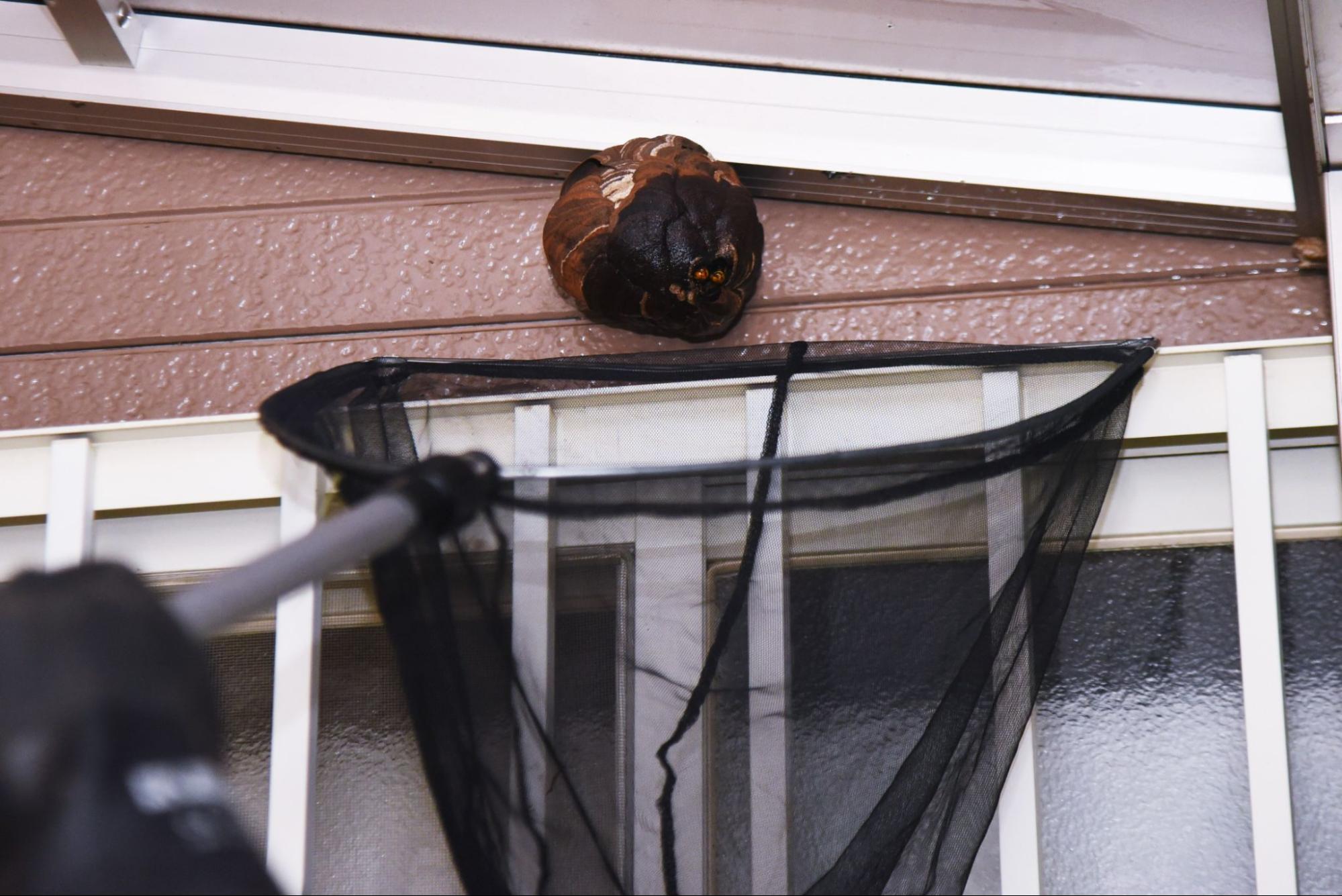
 

image1 2


4. Yard Maintenance

  • Trim vegetation away from home exterior (maintain 12-inch clearance)
  • Remove wood piles, construction debris, and outdoor clutter
  • Keep grass and ground cover maintained but watch for existing ground nests
  • Place flowering plants away from doorways and high-traffic areas

Expert Insight: Ground-nesting yellow jackets hide in overgrown areas. Regular maintenance improves visibility, but hire professionals if you suspect existing nests before mowing.

5. Professional Prevention Programs

Available Services:

  • Spring residual treatments around eaves, soffits, and common nest sites
  • Monthly or quarterly inspections during active season (March-November)
  • PestShield365™ comprehensive programs addressing multiple pest threats
  • Early detection and removal before nests mature

Expert Insight: Properties enrolled in preventative programs experience 85% fewer wasp nest establishments compared to reactive-only approaches.

What Doesn’t Work

  • Fake wasp nests (wasps build within feet of fake nests regularly)
  • Wasp traps alone (catch individuals but don’t eliminate colonies)
  • Vinegar sprays and essential oils (no lasting deterrence, dangerous near active nests)
  • Ignoring small nests (they grow exponentially within weeks)

Expert Insight: Homeowners waste an average of $75-150 on ineffective DIY prevention products before calling professionals. Evidence-based prevention and early professional intervention provide the only reliable protection.

Protecting Your California Home from Stinging Insects

Wasp nests create real danger for California families. Unlike nuisance pests that contaminate food or cause property damage, wasps pose immediate health threats through painful stings and potentially life-threatening allergic reactions.

Professional wasp pest control services provide safe, effective solutions that DIY approaches cannot match. Licensed exterminators bring commercial-grade products, proper protective equipment, and years of experience handling aggressive stinging insects.

Don’t risk your family’s safety with dangerous nests or uncertain DIY methods. At EagleShield Pest Control, we stand vigilant against the stinging insect threats facing California homeowners. Our licensed technicians respond quickly to wasp emergencies throughout Fresno and the Central Valley.

Call us today at 866-693-2006 for same-day wasp nest removal service. Our experts will assess your situation, provide transparent pricing, and schedule immediate service to protect your family.
FAQs About Wasp Pest Control

Yes. Professional pest control successfully eliminates wasp nests with success rates exceeding 95%. Most nests require only one treatment, with complete elimination occurring within hours, and services typically include 30 to 90-day guarantees.
Professional wasp pest control in California typically costs $100 to $800 depending on nest location and complexity. Single accessible nests range from $100 to $300, while difficult locations like ground nests or wall voids cost $300 to $800. Emergency room visits for sting reactions cost $500 to $3,000, making professional removal a valuable investment.
For accessible above-ground nests, professional-grade insecticidal sprays provide fast results. For ground yellow jacket nests and wall void infestations, insecticidal dust works best because it spreads throughout burrow systems. Professional exterminators select appropriate products based on species, nest size, and location.
DIY removal is possible only for very small paper wasp nests discovered early in spring with proper protective equipment and no one with sting allergies in the household. Most situations warrant professional removal including large nests, all yellow jacket and hornet nests, difficult locations, and any nest near high-traffic areas. Homeowners attempting DIY removal risk multiple painful stings, mass attacks, and incomplete treatment.
No. Professional wasp exterminators locate nests by observing wasp flight patterns and behavior. For hidden nests, professionals use tracking techniques and thermal imaging to pinpoint locations safely.
Wasp removal typically takes 30 minutes to two hours depending on nest complexity. Treatment works quickly with professional products killing wasps on contact and complete elimination occurring within hours. Most homeowners can resume normal outdoor activities two to four hours after treatment.
Yes, when applied by licensed professionals following proper protocols. Professional exterminators establish safety perimeters during treatment and use EPA-registered products that dry within two to four hours. Always follow your technician’s instructions about when it’s safe to return to treated areas.
Early spring (April and May) is ideal when nests are small and house only the queen and few workers. However, active nests near doorways or high-traffic locations require immediate professional removal regardless of season. Early morning or evening treatments work best because wasps are less active.
Treated nests will not regenerate, as professional treatment kills the entire colony including the queen. However, new wasp colonies can establish elsewhere on your property during the same season or following years. Most professional services include guarantees covering treatment of new nests appearing within 30 to 90 days.
Yellow jackets and hornets are types of wasps with distinct characteristics. Paper wasps are about one inch long, build open umbrella-shaped nests, and are less aggressive. Yellow jackets are smaller, more robust, build enclosed nests above and below ground, and are California’s most aggressive stinging insect with colonies housing thousands of workers.
Normal reactions include localized pain, redness, and swelling that resolve within hours to days. Allergic reactions (anaphylaxis) are medical emergencies with symptoms including difficulty breathing, rapid pulse, severe facial swelling, and loss of consciousness developing within minutes. Anyone experiencing these symptoms requires immediate emergency medical attention by calling 911.
Do not disturb the nest, and keep family members and pets away from the area. Contact a licensed pest control professional immediately for assessment and removal. If someone with known sting allergies lives in your home or the nest is near high-traffic areas, request emergency same-day service.