Here’s the misconception that trips up a lot of homeowners and buyers: that California law requires a termite inspection before a home can be sold. It doesn’t. What actually happens is that lenders require it, almost universally, which makes it feel mandatory even though the state itself stays out of that particular decision.
That distinction is more than a technicality. It changes who can request an inspection, when you’re entitled to one, and what happens if you skip it. California regulates structural pest control firms closely, but the requirement to obtain a Wood Destroying Organism (WDO) inspection report before a sale comes from lending institutions, not state law.
This post walks through what state law actually governs, who typically ends up requiring an inspection anyway, and how often homeowners should schedule one even without a transaction forcing the issue.
What California Law Actually Regulates
The state’s involvement starts with licensing, not mandates. The Structural Pest Control Board, part of the Department of Consumer Affairs, licenses pest control companies across three branches: fumigation, general pest control, and non-fumigation treatment of wood-destroying organisms. Anyone performing a termite inspection for compensation in California has to be licensed under one of these branches, most relevantly Branch 3.
Once a licensed company does perform an inspection, state regulation kicks in hard on the paperwork side. A written inspection report must be prepared and delivered to whoever requested it, following a standardized state form, whether or not the requesting party ends up paying for the inspection. The report has to include a diagram of the structure, note which areas were and weren’t inspected, and identify any active infestation, prior damage, or conditions likely to lead to one.
What the law doesn’t do is force anyone to order that inspection in the first place. Whether a homeowner gets one, and when, is left entirely up to the parties involved in a given transaction.
Why Almost Everyone Gets One Anyway
Lenders are the reason WDO inspections feel mandatory even though they aren’t legally required by the state. Most financial institutions require a WDO inspection report before financing a home loan, treating it as a basic protection for their investment in the property. Since most home purchases involve financing, the inspection ends up happening in the overwhelming majority of real estate transactions regardless of what state law technically demands.
There’s a practical upside buried in this. Because these reports are filed with the Structural Pest Control Board and kept on record for two years, a prospective buyer can search whether a WDO inspection has already been completed on a specific property, which is useful information before making an offer or negotiating repairs.
Cash buyers, and anyone not going through a lender, can technically skip the inspection entirely. That’s rarely a good idea. An inspection report typically costs far less than any hidden termite damage it would uncover.
How Often to Schedule One Outside a Real Estate Transaction
The real estate trigger is just one reason to get a termite inspection. For homeowners not buying or selling, the general guidance from UC’s statewide pest management program is a professional inspection every three to five years, which is frequent enough to catch most infestations before they cause serious structural damage.
That window should shrink for certain homes. Properties with a prior history of termite activity are more vulnerable to reinfestation and benefit from checking sooner than the standard three-to-five-year window, as do homes where a shelter tube, swarm, or hollow-sounding wood has already shown up.
Not the Law, But Still the Move
No California statute forces a homeowner to schedule a termite inspection. But the state does tightly regulate who can legally perform one and what the resulting report has to contain, which is exactly why the report itself is worth taking seriously once it exists. And because lenders require one for almost every financed purchase, the practical reality is that most Californians end up with at least one WDO inspection on record whether the law technically demanded it or not.
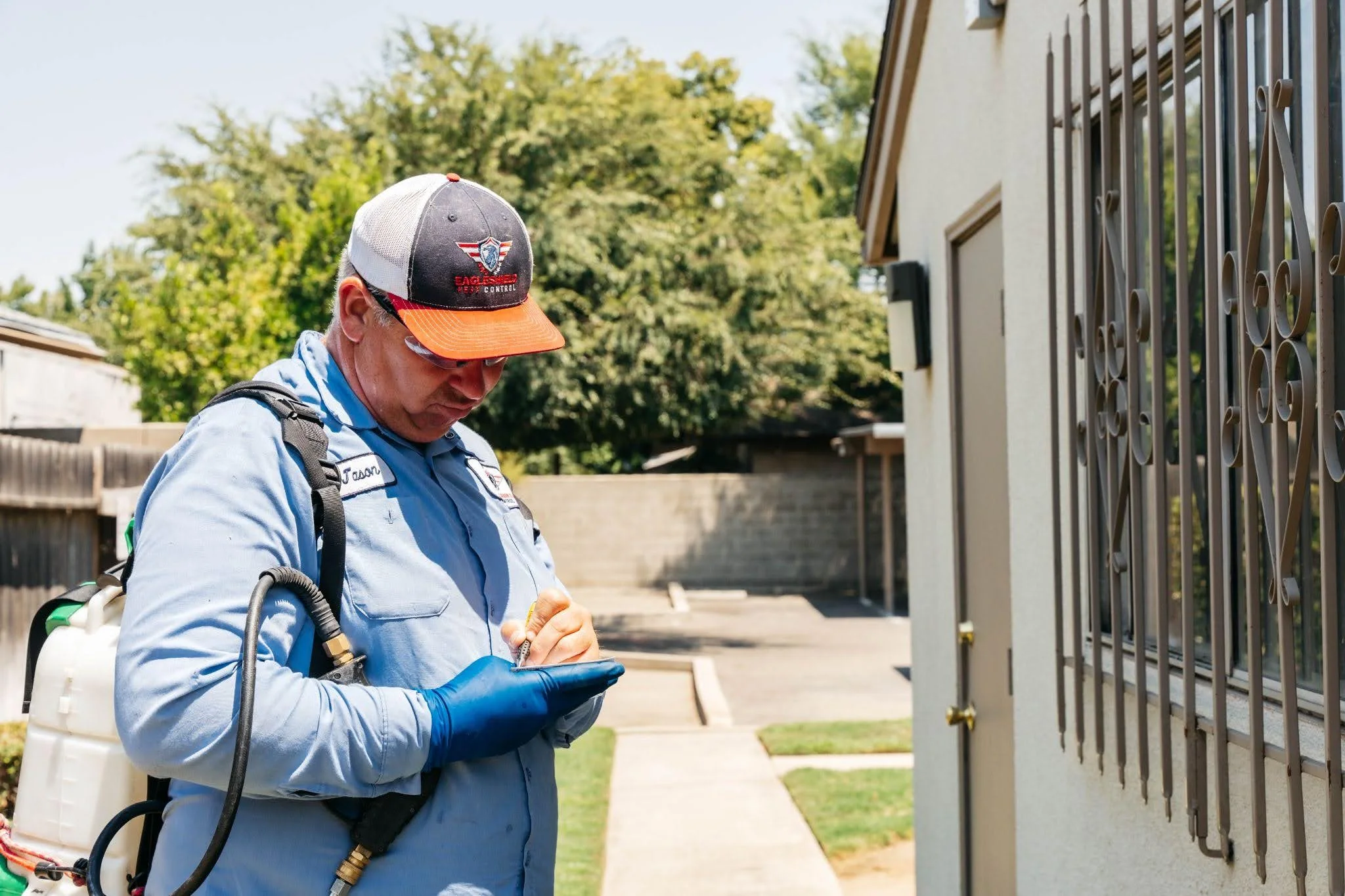
Outside of buying or selling, don’t wait for a transaction to force the issue. Schedule a termite inspection with EagleShield every few years regardless — it costs far less than discovering a colony that’s had years to work undisturbed.
FAQ
Do I have to get a termite inspection to sell my house in California?
State law doesn’t require it, but lenders financing the buyer’s purchase almost always do, which makes it a practical necessity in most sales even though it isn’t a legal one.
What’s a WDO report?
A Wood Destroying Organism inspection report is the standardized document a licensed pest control company must complete after inspecting a structure, covering active infestations, prior damage, and conditions likely to lead to one.
Can I find out if a WDO inspection was already done on a property?
Yes. The Structural Pest Control Board keeps inspection reports on file for two years and offers a property address search to check whether one exists.
How often should I get a termite inspection if I’m not selling my home?
General guidance is every three to five years, sooner if you’ve noticed a shelter tube, a swarm near your foundation, or wood that sounds hollow when tapped.