Rodent Pest Control

Rodent Pest Control: Comprehensive Solutions for Rat and Mouse Removal

California’s rodent problem has gone from nuisance to crisis. According to recent reports, rats have infested more than 100,000 acres of almond orchards across Central California, devastating crops and exposing the scale of the state’s growing infestation issue. What’s happening in the fields mirrors what homeowners and businesses are facing indoors.

From attics and garages to food warehouses and farmlands, rats and mice are exploiting every gap and food source they can find. Long growing seasons and mild winters allow populations to breed year-round, turning small problems into costly invasions.

That’s why professional rodent pest control is no longer optional. It’s essential protection for California’s homes, businesses, and agricultural heartland. The right prevention plan safeguards not just property but also health, food supply, and peace of mind.

Why Rodent Pest Control Matters in California

  • California Faces a Growing Rodent Boom: Across California, rodent populations are climbing to record levels. Warmer winters, expanding urban development, and recent limits on certain rodenticides have all created ideal conditions for rapid growth. In 2024, Los Angeles ranked as the second most rodent-infested city in the nation, and agricultural regions are now reporting similar spikes (Newsweek, 2025).
  • Rodents Devastate California’s Agricultural Heartland: Over the past year, rodents have destroyed more than $300 million in almond crops across Central California, gnawing through irrigation lines, bark, wiring, and nuts. The ripple effect extends to pistachios, citrus, and other key crops, driving up maintenance costs and putting thousands of agricultural jobs at risk. What happens in the orchards ultimately affects local economies and communities statewide (San Francisco Chronicle, 2025).
  • Rising Infestations Endanger Public Health: Beyond property damage, rodents pose serious health risks. They are known carriers of hantavirus, leptospirosis, and typhus, and with populations on the rise, public health officials have noted a parallel increase in rodent-borne illnesses (PCT, 2025). 
  • New Pest Control Laws Complicate the Fight Against Rodents: California’s Poison-Free Wildlife Act and other environmental protections have restricted the use of certain rodenticides to safeguard native species. While these regulations support ecosystem health, they’ve also made rodent control more complex for property owners and municipalities. These ultimately resulted in more sightings, tougher infestations, and a greater need for Integrated Pest Management (IPM).

How to Tell You Have a Rodent Problem

Rodents are stealthy, but they leave unmistakable clues. Some of the most common ones are

  • Scratching or rustling sounds at night
  • Droppings in cabinets or along walls
  • Gnaw marks on wood, wiring, or packaging
  • Shredded paper or insulation for nesting
  • Musty odors or greasy smudge marks on baseboards

Spotting these signs early allows faster, safer resolution and prevents rodents from multiplying or causing lasting damage.
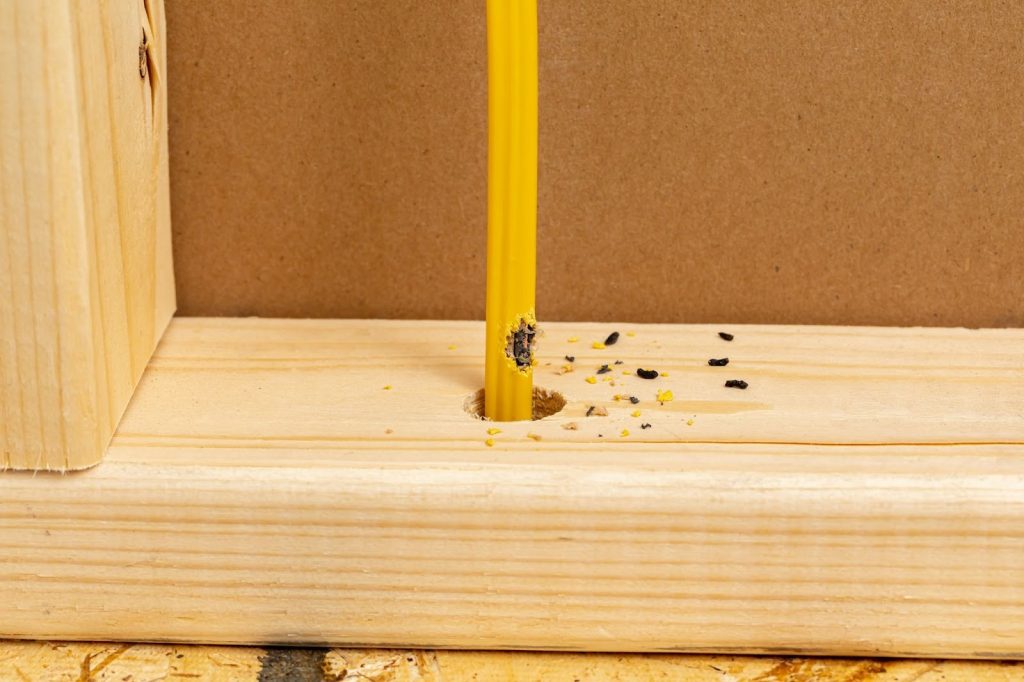
image 1

Caption: Home electrical wires chewed on by rodents.

Rodent Removal Services

Rat and Mouse Extermination

When rodent activity is confirmed, extermination is the first step. We focus on quick, targeted population control. EagleShield’s licensed technicians identify the species and locate nesting and feeding areas. Then we apply precision tools such as traps and monitoring devices that are safe for families, pets, and workplaces.

Unlike DIY attempts that rely on guesswork, professional mouse extermination aligns placement, lure, and timing with real rodent behavior. The goal is immediate population reduction and a foundation for longer-term prevention.

Rodent Removal & Sanitation

Once the active population is under control, removal and sanitation take over. This step deals with what pests leave behind — droppings, nesting materials, and contamination. Our team carefully removes these sources, disinfects affected areas, and neutralizes lingering odors that attract new rodents.

Where extermination eliminates pests, removal restores hygiene and safety. 

Rodent Exclusion

With the environment restored, exclusion ensures rodents can’t come back. Technicians inspect the entire structure and seal entry points around pipes, vents, and utility lines with durable materials like steel mesh and weather-resistant flashing.

Commercial Rodent Control

Commercial facilities face all the same challenges. Commercial rodent control combines all three core methods (extermination, sanitation, and exclusion) into one continuous protection plan designed for businesses.

From restaurants and food processing plants to warehouses and offices, EagleShield tailors programs that ensure health-code compliance, audit readiness, and uninterrupted operations. Discreet service, precise documentation, and after-hours scheduling keep your rodent-free without disrupting your workflow.

Integrated Rodent Infestation Treatment

A sustainable strategy weaves each stage into one seamless process:

  1. Inspection: Identify access points and activity zones.
  2. Targeted Reduction: Apply precise control methods suited to your property.
  3. Sanitation: Remove nests and droppings to disrupt scent trails.
  4. Exclusion: Seal openings to prevent reinfestation.
  5. Monitoring: Follow-up visits confirm stability and adjust for seasonal conditions.

This structured approach, backed by our PestShield365™ Guarantee, ensures that once rodents are gone, they stay gone.
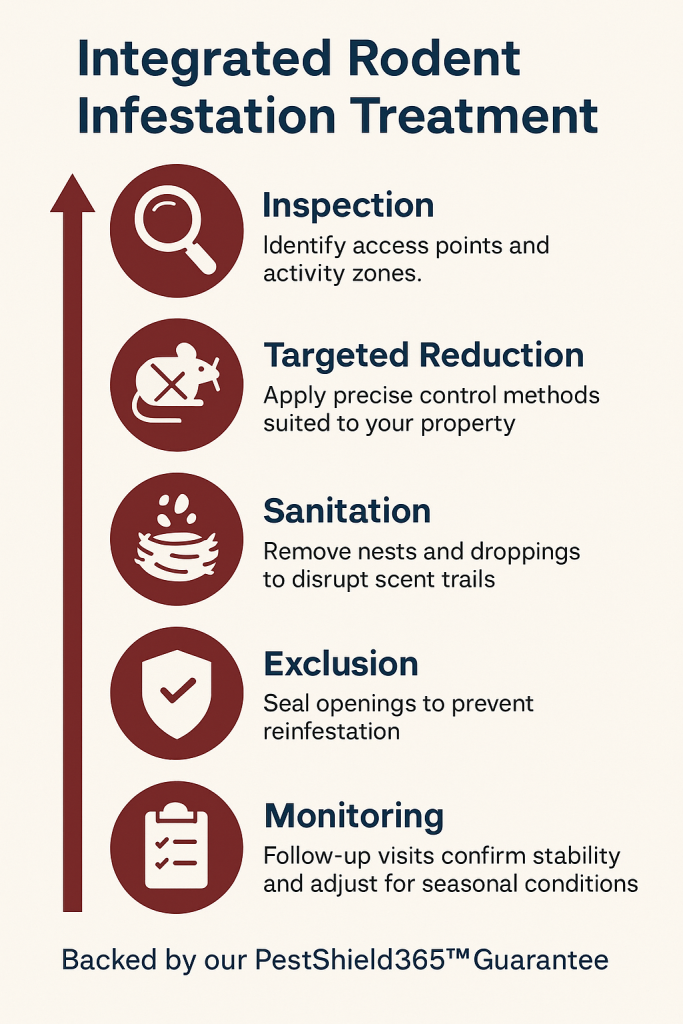
image 1

Smart Prevention Habits for Year-Round Rodent Protection

You don’t need specialized tools to stay pest-free — just a few mindful habits. Here’s how to make your home naturally less inviting to rodents throughout the year.

  • Keep pantry and pet foods in sealed, rodent-proof containers.
  • Empty indoor trash nightly and secure outdoor bins.
  • Fix leaks and remove standing water.
  • Declutter storage areas to reduce hiding spots.
  • Maintain a vegetation-free buffer (12–18 inches) around foundations.

These small, consistent habits help your home resist intrusion between professional visits.

When to Call the Experts

At EagleShield, every treatment plan begins with safety for families, pets, and the environment. Our Integrated Pest Management (IPM) approach prioritizes mechanical controls and structural solutions first, using eco-friendly products only where they add measurable value.

Our ongoing protection programs, including PestShield365™, deliver year-round coverage with scheduled inspections and same-day response. Reach out to us if you notice:

  • Persistent noise in walls or ceilings
  • Fresh droppings after cleaning
  • Chewed wires or insulation
  • Rodent sightings during the day (a sign of high population)
  • Facility compliance needs or upcoming audits

Our trained specialists bring the vigilance, tools, and local knowledge to end the cycle safely and effectively.

Contact Eagleshield for Effective Rodent Pest Control

Rodents are persistent, but a structured plan is stronger. With expert inspection, targeted treatment, and durable exclusion, California properties can stay protected all year. If you’re hearing noises or spotting signs of rodent activity, don’t wait until it spreads. Start with an inspection and personalized consultation.

Call EagleShield Pest Control today at 866-693-2006 for same-day response and lasting protection under our PestShield365™ Guarantee.


Frequently Asked Questions about Rodent Pest Control

Rodent pest control refers to the methods and strategies used to manage and eliminate rodent infestations, including rats and mice, from homes, businesses, and other environments. This involves inspection, exclusion, trapping, and sometimes chemical control to ensure a safe, rodent-free space.
Common signs include droppings, gnaw marks on furniture or wires, scratching noises in walls or ceilings, burrows around the property, and sightings of rodents themselves. Professional inspections can confirm an infestation and its extent.
Both rats and mice can carry diseases, contaminate food, and cause damage. Rats generally pose a greater threat due to their size and potential to cause more structural damage, but mice can also spread diseases and allergens.
Costs vary widely depending on infestation severity, treatment methods, and property size. Prices reported range from about $500 to $800 for typical jobs, including sealing entry points, trapping, removal, and warranty services. Some quotes for severe cases (including cleanup and exclusion devices) reach higher prices. Ongoing maintenance plans may be offered, usually costing around $30-$40/month, but it’s important to understand what maintenance includes.
Store-bought snap traps and glue boards can be effective for small infestations. However, larger infestations or persistent issues often require professional help for safe and effective removal, including sealing access points and comprehensive environment management.
Yes. Some traps, such as multiple-catch live traps, enable capture and relocation without killing the rodents. Professional services may offer such options upon request, especially if chemical control is not desired.
Rodenticides, if used, should always be applied in tamper-proof bait stations to prevent access by children, pets, and wildlife. Responsible pest control services adhere to environmental safety guidelines and use chemicals as a last resort.
Maintaining good hygiene, eliminating food and water sources, sealing small holes and cracks, closing gaps around pipes and drains, and removing clutter that can serve as shelter are key prevention strategies to reduce rodent activity.
Construction disrupts rodent habitats, forcing them to seek food and shelter in nearby buildings, which can result in new infestations.
Peanut butter is generally considered more effective than cheese for attracting rodents to traps. Different baits may work depending on the species and environment.
Treatment time depends on infestation size and methods used. Initial control might take days to weeks to see complete results, especially when exclusion and sanitation are parts of the process.