4.9 Star Rating 250+ Reviews
4.9 Star Rating 250+ Reviews
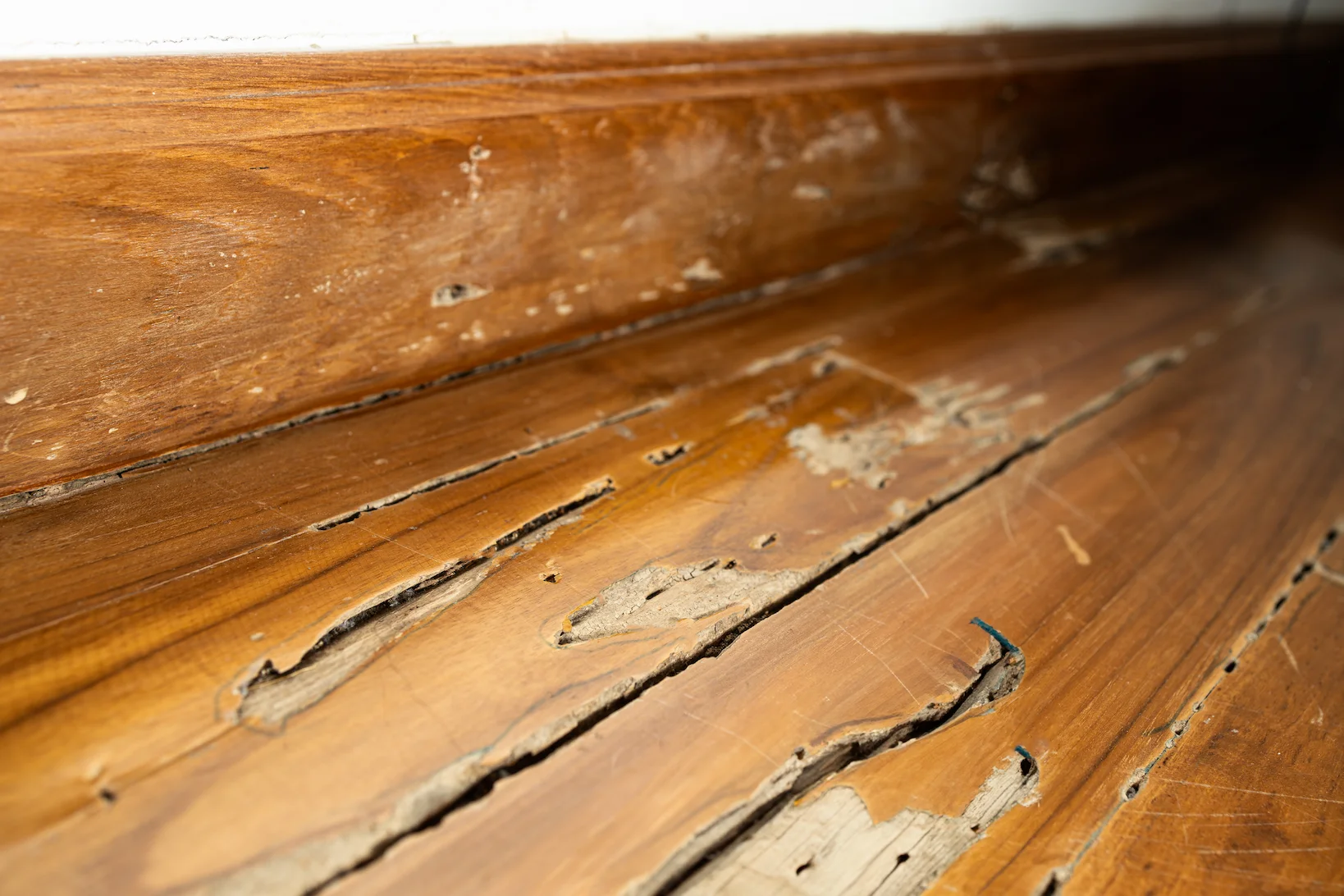
It’s one of the first questions homeowners ask when a termite treatment is scheduled — and the honest answer is: it depends on which treatment method is being used. Some require you to vacate for several days. Others let you stay home the entire time. Confusing one for the other leads to either unnecessary disruption or genuine safety risks.
The method your pest control company recommends will be based on the type of termites present, the location and extent of the infestation, and your home’s construction. Each method has different displacement requirements — and once you know what to expect for each one, the logistics become much easier to plan around.
If you’re still in the stage of figuring out whether you even have termites, our guide to the top signs of a termite infestation can help you assess the situation before booking an inspection.
Whole-structure fumigation is the treatment that most people picture when they hear the words ‘termite treatment.’ It’s used primarily for drywood termite infestations and involves sealing the entire structure under a tent and filling it with a gas termiticide that penetrates every piece of wood in the home — including areas that are completely inaccessible by any other method.
There is no option to remain in the home during fumigation. The fumigant is toxic to all mammals, and the EPA requires that all occupants — people and pets — vacate the structure entirely for the duration of treatment. The home cannot be re-entered until a licensed fumigator has tested the air and confirmed that fumigant levels meet the EPA’s safety standard.
Most fumigations follow a three-day, two-night schedule. Day one involves tenting and introducing the fumigant. Day two is the active treatment period. Day three involves removing the tent, aerating the structure, and conducting air quality clearance testing. You won’t receive the go-ahead to return until air readings confirm the fumigant has fully dissipated. Your pest control company will give you a specific re-entry time in advance — plan around that, not an estimated range.
Your pest control provider will supply a full preparation checklist before the appointment. The most important items are:
One of the most persistent misconceptions about fumigation is that coming home requires deep cleaning. It doesn’t. The fumigant is a gas that fully dissipates during aeration and leaves no residue on surfaces, furniture, dishes, bedding, or clothing. You don’t need to wash linens, wipe down counters, or throw away any sealed food items. Your home is ready to use as soon as you’re cleared to re-enter.
Liquid termiticide applied to the soil around and beneath your home is the standard treatment for subterranean termites. A technician trenches around the foundation perimeter, injects termiticide into the soil at measured intervals, and fills the trench to create a continuous chemical barrier that subterranean termites cannot cross without being exposed to the active ingredient.
In most cases, you do not need to leave your home for liquid soil treatment. The work is done outside or beneath the structure, and the termiticide is injected into the ground — not sprayed into the air inside your living space. You may be asked to stay clear of the specific work areas while the technician is treating (exterior foundation walls, crawl space access points, garage perimeter), but the rest of the home remains accessible throughout.
If your home has a crawl space that requires interior soil treatment, the technician will need unobstructed access to that area and may ask that you and pets avoid the crawl space entry for a short period. In some cases involving slab-on-grade construction, small access holes may be drilled through interior flooring to inject termiticide beneath the slab — your technician will discuss this with you during the pre-treatment inspection and confirm exactly which areas will be affected.
Liquid treatment typically takes a few hours depending on the size and perimeter of your home. There’s no strong odor, no visible residue indoors, and no recovery period required once the technician leaves. You can resume normal activity in your home immediately after treatment is complete. Any access holes drilled during the treatment will be plugged and patched before the technician wraps up.
Bait station installation is the least disruptive of all termite treatment methods. Stations are installed in the soil around the exterior perimeter of your home at regular intervals. Each station contains a cellulose bait matrix treated with a slow-acting insecticide. When foraging termites find the stations, they consume the bait and carry it back to the colony — gradually collapsing the colony from within.
There’s nothing about bait station installation that requires you to leave your home or restrict your activity in any way. The entire process takes place outside, is non-invasive, and generates no chemical exposure risk for household members. The only interior access required is if stations need to be placed in a garage or crawl space, and even then the process is brief and targeted.
Bait systems aren’t a one-time treatment — they require periodic service visits to inspect station activity, replenish bait, and adjust placement if needed. These visits are similarly low-disruption. A technician will check each station around the exterior, which typically takes under an hour, and no interior access is usually required unless the monitoring program includes a crawl space inspection.
Spot treatments for drywood termites involve injecting termiticide directly into specific affected wood members — a wall cavity, a beam, a window frame — rather than treating the whole structure. Because the work is localized, displacement requirements are also localized. You’ll be asked to stay out of the room or zone being treated while the technician works, but the rest of the home is unaffected.
Heat treatment, which raises the temperature of infested wood areas to levels lethal to termites, requires clearing the treated zone completely of people and heat-sensitive items for the duration of the process. Depending on the size of the area being treated, this could mean vacating a room, a floor, or a larger portion of the home for several hours. Your technician will define the exact boundaries when reviewing the treatment plan.
Both spot and heat treatments typically allow you to return to treated areas the same day, once the technician confirms the work is complete and the area has returned to normal temperature or the termiticide has been absorbed.
Regardless of the method being used, a few preparation steps make treatment day run more smoothly for everyone:
| Already treated and wondering what comes next? Our post on how long termite treatment lasts covers what to expect from each method over time — including when to schedule your next inspection and what your warranty should cover. |
In most cases, no. Liquid soil barrier treatment is applied to the ground around and beneath your home’s exterior. You may be asked to stay clear of specific work zones while the technician is actively treating, but the interior of your home remains accessible throughout and you can return to normal activity as soon as the job is complete.
Plan for two to three days and two nights as a standard baseline. The exact timeline depends on the size and construction of your home, as well as temperature and ventilation conditions. Your pest control company will provide a specific re-entry window in advance. You cannot return until a licensed fumigator tests the air and confirms it meets EPA safety requirements.
For fumigation, yes — all pets, including fish, birds, and reptiles, must be removed for the full duration of treatment and until the home is cleared for re-entry. For liquid soil treatment and bait station installation, pets generally don’t need to leave the home but should be kept away from active work areas while treatment is underway. Confirm specifics with your pest control provider based on the method being used.
No deep cleaning is required. The fumigant is a gas that fully dissipates during aeration and leaves no residue on surfaces, dishes, fabrics, or furniture. You do not need to wash bedding, wipe down countertops, or launder clothing. Once you receive clearance to re-enter, your home is ready to use.
Let them know about any household members with respiratory conditions, chemical sensitivities, or compromised immune systems so they can advise on appropriate precautions. Also flag any fish tanks, aquariums, or specialty pets that require specific handling during fumigation. If your home has a water well nearby, mention that as well — it affects how certain treatments are applied near the foundation.
Whether your treatment requires three days away or just a few hours of staying out of the yard, knowing exactly what to expect in advance removes the stress from the process. The method being used drives everything — the prep, the timeline, and what your household needs to do before and after.
A trustworthy pest control company will walk you through every step of this before treatment day, provide a written preparation checklist, explain what products are being applied and why, and confirm your re-entry timeline clearly. If that conversation hasn’t happened, ask for it — you’re entitled to that information before anyone starts work on your home. Our post on what to look for when choosing a termite company covers what that pre-treatment conversation should look like.At Eagle Shield Pest Control, we walk through preparation requirements with every homeowner before scheduling treatment — so there are no surprises on treatment day and no questions left unanswered. If you’re ready to get started or just want to know which treatment is right for your situation, reach out to our team today. We’ll give you a clear picture of what to expect from start to finish.