4.9 Star Rating 250+ Reviews
4.9 Star Rating 250+ Reviews
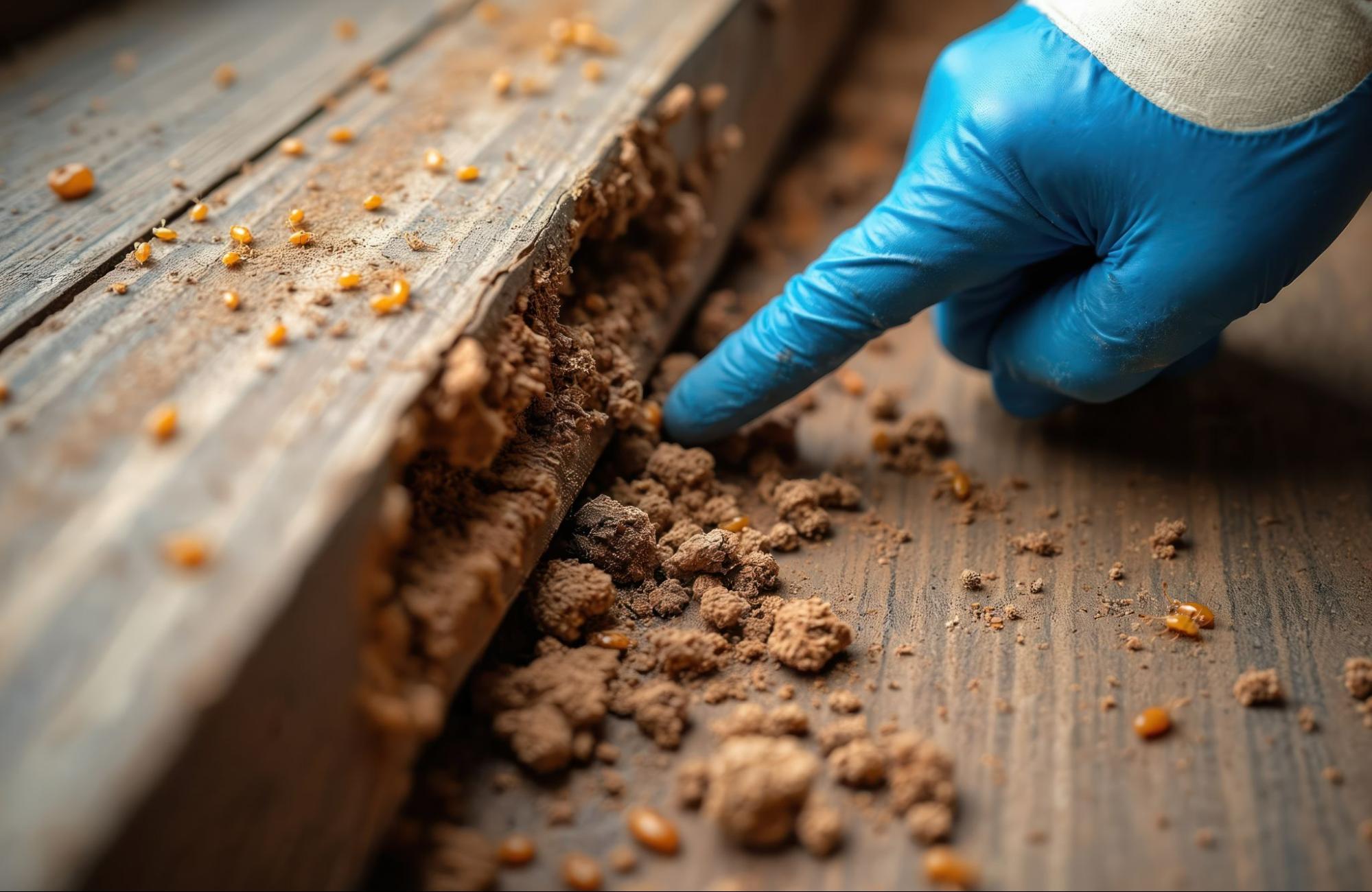
Carpenter ants don’t eat wood like termites, but the damage they cause is just as destructive. They excavate smooth tunnels through structural wood to build nests, systematically weakening your joists, beams, and framing. A mature colony houses 10,000 to 50,000 workers. Each one carves away at your home’s structural integrity. Leave them untreated for several years, and repairs cost $1,000 to $10,000 or more.
California’s Central Valley is carpenter ant paradise. Warm summers, mild winters, and year-round moisture from irrigation systems create perfect conditions for colonies to thrive. Peak activity runs from March through October in Fresno, but indoor colonies never truly stop. These pests target moisture-damaged wood first, then expand into sound wood as populations explode.
This guide gives California homeowners everything you need to stop carpenter ants before they cost you thousands. You’ll learn how to identify them early, understand what professional treatment actually involves, recognize when DIY wastes your money, and implement prevention strategies that protect your home long-term.
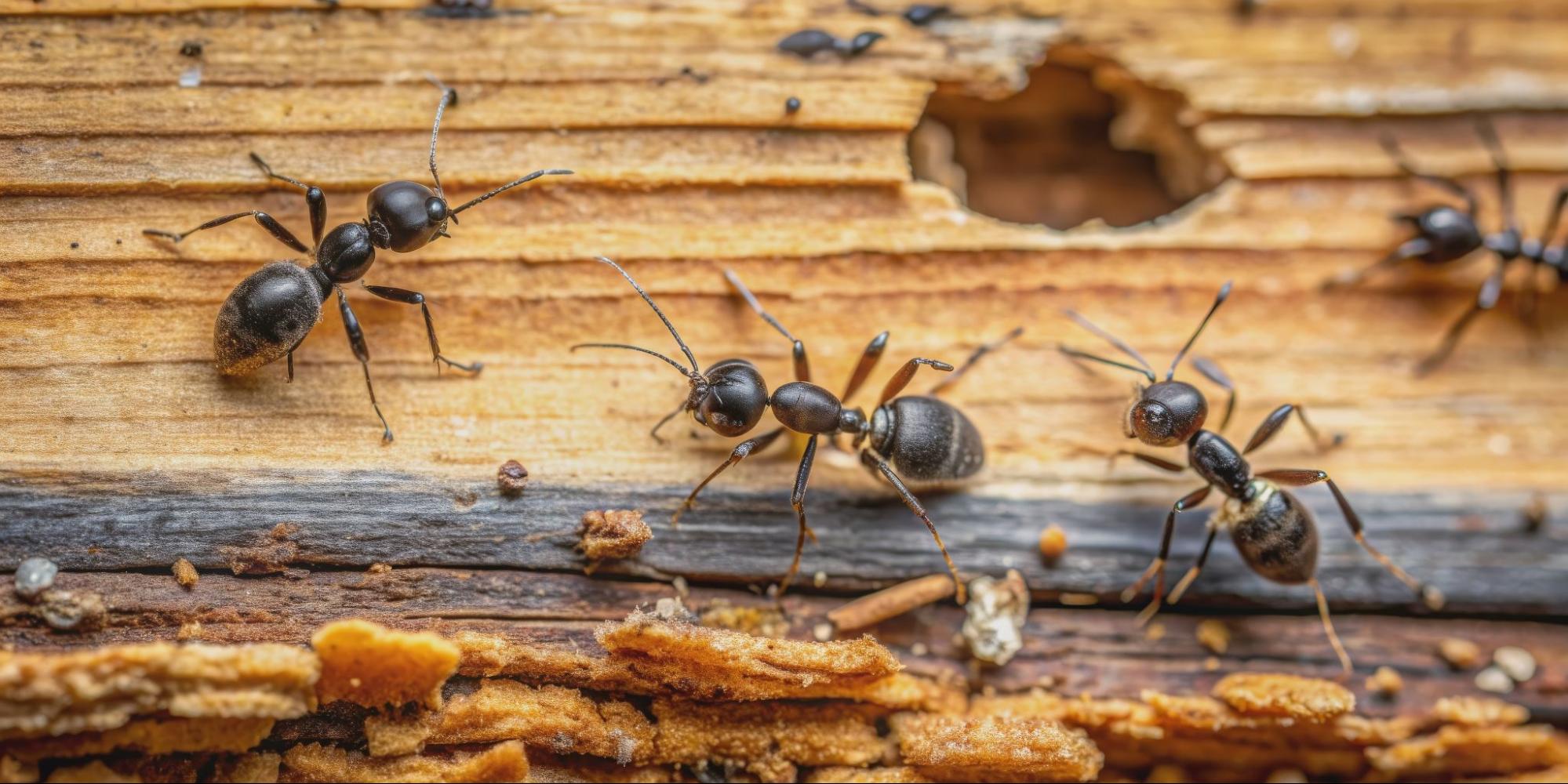
Carpenter ants rank among California’s most serious structural pests. Carpenter ants are large black or red-black ants measuring 1/4 to 3/4 inch long. California’s primary species are black carpenter ants, including Camponotus modoc and Camponotus vicinus. Workers range from 1/4 to 1/2 inch, while queens and winged reproductives reach 3/4 inch.
These ants excavate galleries through wood to create nesting space. Mature colonies contain 10,000 to 50,000 workers spread across multiple sites. The main colony typically establishes outdoors in tree stumps, dead trees, or wood piles. Satellite colonies form inside structures, especially in moisture-damaged wood.
Structural damage accumulates slowly over years before becoming visible. They create smooth, clean galleries that weaken wood’s load-bearing capacity. Common damage sites include wall studs, floor joists, roof rafters, window and door frames, support beams, and hollow core doors.
Structural repairs typically cost $1,000 to $10,000 depending on extent and location. Foundation damage, major beam replacement, or extensive wall void damage can exceed $15,000.
Carpenter ants have pinched waists, elbowed antennae, and unequal wing lengths on swarmers. They leave coarse sawdust mixed with insect body parts. Termites have straight bodies with no waist, straight antennae, and equal-length wings. They leave fine pellet-like droppings. Both require professional treatment, but identification determines approach.
Catching carpenter ants early saves thousands. Homeowners who detect infestations within the first year pay $400 to $600 for treatment. Wait three to five years, and you’re looking at $800 to $1,500 for pest control plus $2,000 to $10,000 in structural repairs. Colonies grow 20 to 30% annually, and damage accumulates silently inside your walls long before you see visible problems.
Know what to look for. These warning signs appear in predictable patterns that tell you exactly how serious the problem is.
Large black ants measuring 1/4 to 1/2 inch indicate potential activity. Winged ants indoors signal a mature colony inside your structure. These swarmers indicate the colony is at least three years old. Shed wings near windows or doors after mating flights confirm indoor nesting.
Frass or sawdust piles appear near nest sites. Unlike fine dust, carpenter ant frass consists of coarse wood shavings mixed with insect body parts and fecal pellets. Fresh piles indicate active excavation. Common locations include baseboards, window sills, door frames, and areas beneath wooden structures.
Faint rustling or crunching sounds inside walls at night indicate large, active colonies. These sounds are most noticeable in quiet hours when ants actively excavate. If you hear this, the infestation is substantial and requires immediate professional attention.
Hollow-sounding wood when tapped suggests internal galleries. Small holes or slits in wood surfaces serve as exit points. Opening damaged wood reveals smooth, clean galleries. Sagging or visibly damaged wood indicates advanced infestation. By the time structural weakness becomes visible, significant damage has occurred.
Swarmers indoors mean mature colonies exist inside your structure. Sawdust appearing regularly confirms active excavation. Multiple signs occurring together indicate an established infestation. Any visible structural wood damage requires immediate inspection.
Many homeowners question whether professional carpenter ant control justifies the cost. Here’s exactly what licensed pest control professionals do that DIY approaches cannot replicate.
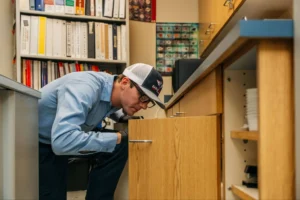
Professional treatment begins with 30 to 60 minute comprehensive inspection covering entire property exterior and interior including attics, crawl spaces, and basements. Professionals use moisture meters to identify water-damaged wood. They sound wood by tapping to detect hollow areas. Thermal imaging equipment detects nest locations inside walls.
The inspection locates both primary and satellite colonies. Treating only visible ants while missing hidden nests ensures treatment failure.
Confirming carpenter ants versus other species determines treatment approach. Professional treatment targets both active nests and foraging workers.
Direct Nest Treatment:
Indirect Treatment:
Exterior Applications:
Licensed operators use commercial-grade products unavailable to consumers. Non-repellent insecticides like Termidor, Taurus, and Phantom work because ants can’t detect them. Professional dust formulations, including Drione, Delta Dust, and Tempo Dust remain effective for months. Concentration levels exceed retail products.
Application equipment, including professional dust bulbs, injection systems, and power sprayers, delivers products precisely where needed. Homeowners cannot access wall voids effectively without proper equipment.
Professionals identify moisture sources supporting colonies and recommend repairs, including structural issues, wood-to-soil contact, drainage problems, roof or plumbing leaks, and ventilation improvements. These aren’t upselling. They’re essential for preventing re-infestation.
Service includes scheduled return visits, typically 2 to 4 weeks after initial treatment. Technicians monitor for continued activity and retreat if needed at no additional charge. Without follow-up, you won’t know if hidden colonies survived.
Success comes from locating all nests, using products ants cannot detect, accessing areas homeowners cannot reach, addressing conducive conditions, and providing guarantees with follow-up.
Understanding when DIY might work and when it wastes time helps you make informed decisions.
Very limited scenarios allow effective DIY control. Small outdoor colonies in accessible locations like tree stumps or wood piles can sometimes be treated successfully. Requirements include ants only foraging indoors while nesting outside, the outdoor colony being located and accessible, no structural infestation, and no moisture damage.
Retail ant baits may work if ants accept the bait. Carpenter ants prefer protein- and grease-based baits. Acceptance varies by colony. Even when successful, baits take 2 to 4 weeks minimum. Most attempts fail because colonies remain untreated inside walls.
Ant sprays and dusts kill only visible ants. They don’t reach nests inside structures. Many are repellent, causing ants to relocate deeper. Homeowners cannot access wall voids without drilling and proper equipment.
Boric acid works slowly when ants contact it, but delivering it to nest locations proves difficult. Home remedies show minimal effectiveness against established colonies.
Homeowners cannot locate nests inside walls without professional experience and equipment. They lack moisture meters, borescopes, and thermal imaging. They don’t have access to non-repellent professional products. They cannot access wall voids to treat nests directly. DIY approaches don’t address moisture and structural issues.
Average homeowners spend $150 to $300 on retail products before calling professionals. Delay allows colonies to grow 20 to 30% larger. Structural damage worsens. Eventually, homeowners pay for professional service plus accumulated damage.
Prevention protects your home long-term and costs far less than treating infestations repeatedly.
Moisture control is the most critical prevention strategy. Carpenter ants require moisture to establish colonies.
Fix all water issues immediately:
Improve drainage:
Increase ventilation:
Critical actions:
Seal all entry points:
Maintain clearances:
Modify habitat:
Annual or quarterly professional perimeter treatments create barriers preventing outdoor colonies from establishing indoor nests. These programs cost $300 to $800 annually, far less than treating full infestations at $800 to $1,500.
Carpenter ants cause serious structural damage by excavating galleries through wood framing. Early detection and professional treatment prevent damage costing thousands to repair.
Professional treatment succeeds because licensed technicians locate all nests, including hidden colonies, use commercial products unavailable to consumers, access wall voids homeowners cannot reach, and address moisture issues preventing re-infestation.
At EagleShield Pest Control, we’ve protected Fresno and Central Valley homes from carpenter ants for years. Our licensed technicians provide comprehensive inspections locating all nests, targeted treatments eliminating entire colonies, moisture problem identification, and follow-up visits ensuring success.
Call us today at 866-693-2006 to schedule your comprehensive carpenter ant inspection. Our experts will assess your property, locate all nest sites, identify moisture issues, and provide a detailed treatment plan with transparent pricing.