
4.9 Star Rating 250+ Reviews
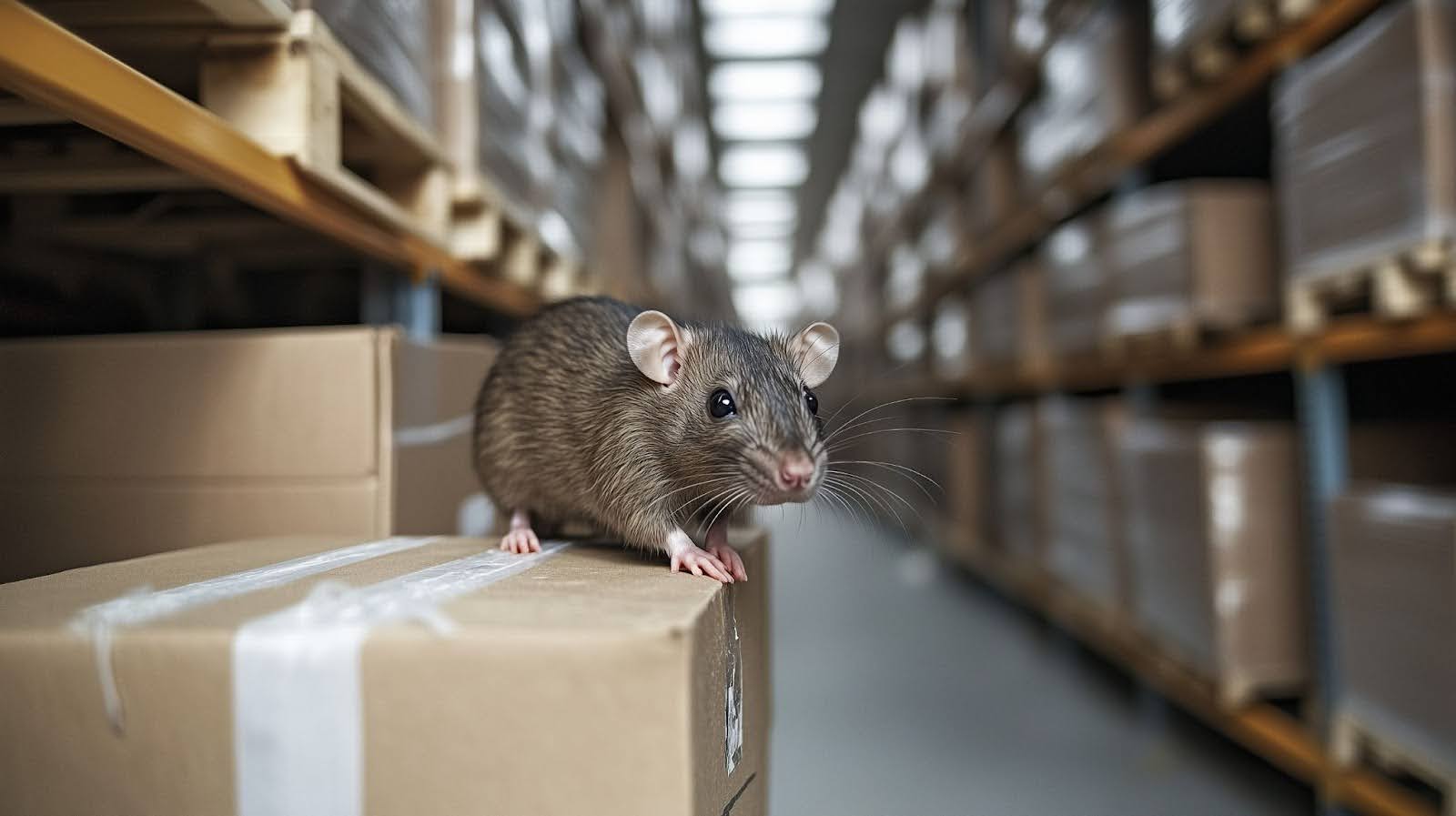
Gnawed packaging. Rodent droppings near stored products. Pest activity discovered during a client audit. In warehouse environments, these scenarios aren’t just operational headaches—they’re threats to your bottom line.
Rodents consume or contaminate approximately 20% of the world’s food supply, with warehouses and distribution centers representing primary infestation sites. The consequences of inadequate pest management are severe. For instance, the Family Dollar warehouse rodent infestation resulted in over $40 million in fines.
California’s role as the nation’s largest agricultural producer and a critical distribution hub compounds these challenges. Constant product movement through ports and distribution centers, combined with the state’s mild climate, creates year-round pest pressures. Understanding comprehensive warehouse pest control protects your inventory, maintains compliance, and safeguards your business operations.
The Unique Challenge of Warehouse Pest Management
Industrial facilities face pest challenges that differ significantly from residential or small commercial environments.
- Rodents pose the most serious threat to warehouse operations. Rats and mice gnaw through packaging to access products, contaminate inventory with droppings and urine, and chew electrical wiring. A single rodent sighting during an inspection can shut down operations or cost major contracts.
- Stored product pests, including grain beetles, flour beetles, Indian meal moths, and cigarette beetles infest dry goods, grains, flour, pet food, and similar products. These pests often arrive with shipments and quickly spread throughout facilities. Once established, they’re difficult to eliminate and can contaminate entire inventory batches.
- Cockroaches thrive in warehouse environments with their ability to survive on minimal food and water. They contaminate products, trigger allergens, and their presence indicates sanitation issues that auditors and inspectors view critically. German cockroaches and American cockroaches both present challenges in California facilities.
- Birds nest in warehouse rafters and around loading docks, creating droppings that damage products and structures while spreading diseases. Their presence violates food safety standards and creates liability concerns.
- Ants form large colonies that infiltrate food products, with Argentine ants particularly problematic in California warehouses. Their cooperative supercolonies can number in the millions, making elimination challenging without professional intervention.
Large open spaces require different treatment approaches than enclosed rooms. High-volume product movement constantly introduces new pest risks. Loading docks function as primary entry points where every shipment represents potential infestation. Regulatory compliance requirements from the FDA, USDA, health departments, and client audits demand meticulous documentation.
Professional Warehouse Pest Control Process
Effective commercial warehouse pest management combines inspection expertise, strategic prevention, and minimal-disruption treatments that keep operations running while eliminating pest threats.
Step 1: Comprehensive Facility Assessment
Our licensed technicians conduct thorough facility inspections. The inspection covers interior storage areas, exterior perimeters, loading docks, break rooms, utility areas, and structural vulnerabilities around doors and roof penetrations. This process identifies current pest activity through droppings, gnaw marks, live sightings, and monitoring data.
Our assessment evaluates sanitation practices, product storage methods, and facility maintenance that impacts pest risk. Each inspection considers your specific inventory—food products face different regulatory requirements than non-food items.
Loading docks receive special attention as the primary pest entry point. Technicians examine door seals, dock levelers, trailer gaps, and receiving procedures. These areas either prevent or facilitate pest access.
Step 2: Customized IPM Program Development
Our warehouse IPM programs are tailored to your facility’s specific operations and inventory. Integrated Pest Management emphasizes prevention and monitoring over reactive treatments, reducing pesticide use while improving effectiveness.
The program includes strategically placed monitoring stations for early detection, treatment protocols that don’t disrupt operations, exclusion measures at vulnerable entry points, and sanitation recommendations that eliminate attractants. Comprehensive documentation satisfies audit requirements and tracks pest trends over time. The approach balances cultural controls, mechanical devices, and strategic chemical applications when needed.
Treatments are coordinated during low-activity periods or after hours, always with minimal disruption to productivity.
Step 3: Implementation and Active Management
Regular monitoring schedules range from weekly to monthly depending on facility risk levels. Monitoring stations provide continuous surveillance between visits.
Warehouse rodent control emphasizes exclusion as the primary defense. This includes sealing entry points, installing door sweeps and dock seals, implementing proper waste management, and strategic trapping in high-risk areas. Stored product pest control focuses on incoming shipment inspections, FIFO product rotation, temperature and humidity monitoring, and targeted treatments when infestations are detected.
Employee training covers pest awareness, reporting protocols, and prevention practices. Your staff becomes the first line of defense when they understand what to look for and how to respond. Real-time communication ensures immediate notification of urgent pest activity—no waiting for scheduled reports when action is needed.
Step 4: Documentation, Reporting, and Continuous Improvement
Comprehensive documentation separates adequate pest control from programs that withstand regulatory scrutiny. We provide detailed service reports after every visit documenting pest activity observed, treatments performed, monitoring results, and corrective actions recommended.
We track trends over time, identifying patterns that reveal underlying issues or seasonal variations. This data-driven approach allows continuous program improvement. Regular program reviews with facility management ensure our services align with your evolving needs and industry requirements.
We prepare documentation that satisfies third-party audits, regulatory inspections, and client certifications. Our partnership approach means we’re invested in your facility’s success, not just completing service calls.
Warehouse Pest Control Best Practices
- Loading dock vigilance: Every incoming shipment represents a potential pest introduction. Inspect trailers before unloading, and check pallets for signs of pests or damage. Reject shipments showing evidence of infestation, and maintain dock seals and door sweeps in good condition.
- The two-hour rule: Inspect incoming products within two hours of receipt when possible. Fresh pest evidence is easier to identify, and you can address problems before pests disperse into your facility.
- Pallet protocols: Wooden pallets harbor pests and transport them between facilities. Inspect all incoming pallets, consider plastic pallet alternatives for internal use, and avoid storing empty pallets against walls where rodents nest.
- Invest in physical barriers: Air curtains over doors, dock seals that close gaps between trailers and buildings, and self-closing doors on all access points dramatically reduce pest entry. These investments pay for themselves through reduced pest pressure.
- FIFO inventory rotation: First-in, first-out rotation not only maintains product freshness but also ensures regular product inspection. Stagnant inventory allows stored product pests to establish undetected.
- Employee engagement: Train staff to recognize pest signs, report activity immediately, maintain cleanliness in break areas, and properly store personal food items. Your employees interact with the facility daily. Their awareness multiplies your pest detection capability.
- California’s continuous challenge: Unlike regions with winter pest dormancy, California warehouses face year-round pest activity. Continuous vigilance and proactive management prevent problems rather than react to them.
Protect Your Facility and Inventory
Professional warehouse pest control protects your inventory investment, maintains regulatory compliance, and supports your operational success. Our deep understanding of California’s commercial pest challenges and proven IPM methods ensure your facility remains pest-free and audit-ready.
Protect your facility and inventory with expert commercial warehouse pest management. Call us today at 866-693-2006 or get a reply same-day. Our licensed technicians stand ready to partner with you in maintaining a pest-free operation that meets the highest standards.